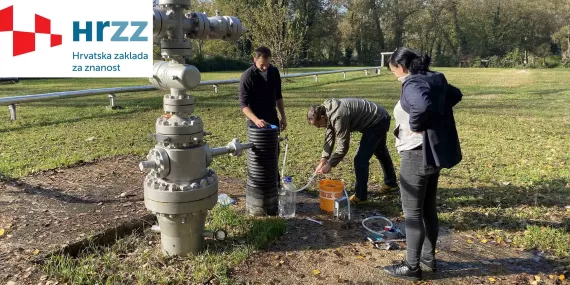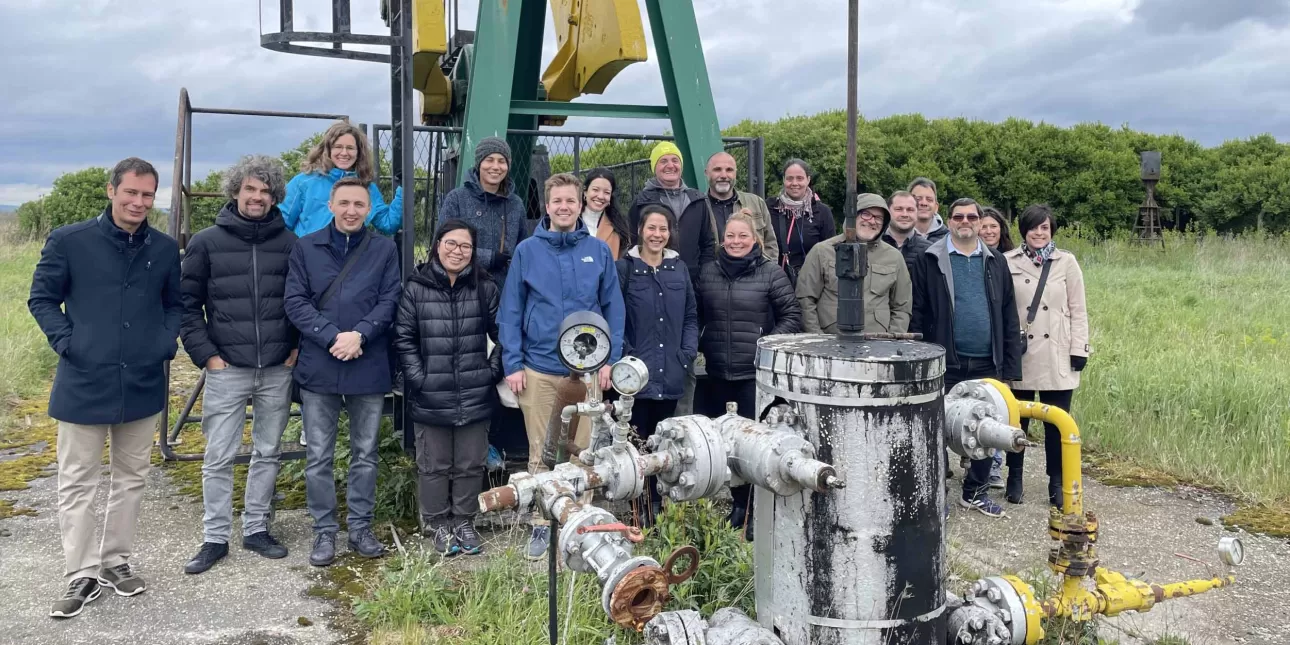
Glavni cilj projekta TRANSGEO (Revitalizacija napuštenih bušotina za eksploataciju geotermalne energije) je prenamjena postojećih dubokih naftnih i plinskih bušotina kako bi mogle poslužiti za iskorištavanje geotermalne energije i pohranu toplinske energije. Time se produljuje vijek trajanja bušotina nakon prestanka proizvodnje ugljikovodika te se imovina iz fosilnog energetskog sektora revitalizira u obnovljive izvore, u skladu s energetskom tranzicijom.
Više o tom europskom projektu moglo se doznati na radionici koja je održana 24. rujna na Rudarsko-geološko-naftnom fakultetu Sveučilišta u Zagrebu. Kako su pojasnili suradnici na projektu prof. dr. sc. Tomislav Kurevija i doc. dr. sc. Marija Macenić s RGN-a, u projektu TRANSGEO sudjeluje 10 partnera iz pet zemalja: Njemačke (pod vodstvom GFZ Helmholtz iz Potsdama), Austrije, Mađarske, Slovenije i Hrvatske. Osim RGN-a, u njemu iz Hrvatske još sudjeluje i Međimurska energetska agencija (MENEA). Ukupna vrijednost projekta je 2,6 milijuna eura, od čega se 80% sufinancira bespovratnim sredstvima iz Europskog fonda za regionalni razvoj. Službeno je započeo 1. svibnja 2023. i trajat će 36 mjeseci, odnosno do 30. travnja 2026. godine.
U glavne projektne aktivnosti ubrajaju se:
• izrada sustava validacije za transformaciju naftnih i plinskih u geotermalne bušotine
• procjena potencijala za prenamjenu bušotina u središnjoj Europi
• poticanje politike energetske tranzicije i prijelaza s fosilnih goriva na geotermalnu energiju u središnjoj Europi.
U sklopu projekta predviđeno je nekoliko pilot-projekata, od čega je na području Republike Hrvatske planirana provedba dvije pilot-aktivnosti za postojeće bušotine, u svrhu odabira i primjene najbolje tehnologije za njihovu prenamjenu. Za dvije odabrane lokacije izradit će se sveobuhvatne investicijske studije koje će dati odgovore o tehno-ekonomskim mogućnostima revitalizacia starih bušotina.
Prva pilot-lokacija nalazi se na području Grada Zagreba i industrijske zone u okolici Radničke ceste, a analizirat će se geotermalni potencijal duboke napuštene bušotine Savica-1 za potrebe podzemnog skladištenja toplinske energije (tzv. BTES - borehole thermal energy storage). Duboki bušotinski izmjenjivač topline sa zatvorenom cirkulacijom uobičajeno se predlaže kao rješenje za geotermalno iskorištavanje u slučajevima suhih bušotina bez mogućnosti proizvodnje vrućih fluida. Metoda revitalizacije u ovom slučaju sastoji se od korištenja postojeće bušotinske zaštitne cijevi kao vanjske cijevi i novoumetnutog tubinga kao izolirane unutarnje cijevi dubokog koaksijalnog izmjenjivača topline. Načelo opremanja bušotine s koaksijalnim cijevima u slučaju tehnologije skladištenja toplinske energije u bušotini isto je kao i kod dubokog bušotinskog izmjenjivača topline (DBHE - deep borehole heat exchanger). Razlika između ta dva pristupa vidi se u upravljanju energijom - u slučaju DBHE toplina se pridobiva iz okolne stijene prema toplinskim potrebama potrošača u zimskom razdoblju, a stijena se prirodno toplinski regenerira tijekom ljetnog razdoblja. Sustav BTES pak služi kao sezonsko skladište toplinske energije, omogućujući pohranjivanje toplinske energije (waste heat) u stijenu tijekom ljetnog razdoblja i pridobivanju u zimskom razdoblju. Djelomično očuvana duboka bušotina Savica-1, koja je bila istražna bušotina za definiranje granica zagrebačkog geotermalnog polja, nalazi se unutar perimetra Grada Zagreba i odabrana je za pilot lokaciju BTES zbog svoje blizine industrijskom području, ali i kogeneracijskoj elektrani HEP TE-TO koja može biti izvor jeftine otpadne topline tijekom ljeta kada ne postoji potreba za toplinskom energijom u centraliziranom toplinskom sustavu Zagreba, osim za potrebe potrošne tople vode. Stoga je glavni cilj investicijske studije projekta TRANSGEO istražiti moguću prenamjenu bušotine Savica-1 kao BTES sustav za pohranu topline, odnosno kao ležišni spremnik između sezonske potražnje za grijanjem i otpadne topline iz obližnje industrije provedbom analize protoka energije u vremenskoj seriji za jednu kompletnu godinu.
Druga pilot-lokacija nalazi se u Međimurskoj županiji, a aktivnosti će obuhvatiti sve potrebne pripremne radnje i analize kako bi bušotine u široj okolici naftnog polja Mihovljan bile detaljno analizirane i kako bi se za njih procijenila mogućnost buduće prenamjene u geotermalne, odnosno proveli svi potrebni koraci za pokretanje same infrastrukturne investicije jednom kada se napusti proizvodnja ugljikovodika na lokaciji. Naftno polje Mihovljan nalazi se u blizini grada Čakovca u Međimurskoj županiji, Hrvatska, u njegovim sjevernim dijelovima. Polje je započelo eksploataciju ugljikovodika još davne 1984. godine, a koja je još uvijek u tijeku. Ukupno je unutar polja Mihovljan izbušeno 11 bušotinskih kanala, od kojih je 7 već likvidirano, 3 su neaktivna, a jedna bušotina još uvijek proizvodi naftu. Od preostale 4 bušotine, bušotina Mih-1 je vertikalna, dok su Mih-3beta, Mih-6 i Mih-7 koso usmjerene bušotine. Sve četiri preostale bušotine predlažu se za prenamjenu u dva proizvodno-utisna para bušotina za iskorištavanje geotermalne vode nakon što se na lokaciji napusti proizvodnja ugljikovodika. Revitalizacija polja ciljala bi iskorištavanje plićih tankih pješčenjačkih slojeva iznad trenutno proizvodnih naftnih slojeva kao mali pokazni primjer revitalizacije naftnog polja u geotermalno, jednom kada se polje napusti. Prvi proizvodno-utisni par bio bi Mih-1 kao proizvodna bušotina i Mih-7 kao utisna bušotina, dok bi drugi par bio Mih-3beta kao proizvodna bušotina i Mih-6 kao utisna bušotina. Predinvesticijska procjena revitalizacije naftnog polja i studija izvodljivosti pilot projekta promicat će mogućnost proizvodnje geotermalne toplinske energije na infrastrukturi postojećih sustava proizvodnje nafte i plina, ukoliko se ustanovi potencijal pregledom dokumentacije bušotinskog fonda na lokaciji i postupcima ležišnog inženjerstva. Takvi pilot-projekti pomoći će u uvođenju ekonomski održive i održive transformacije sektora nafte i plina u ovim regijama u geotermalni sektor. Nadalje, projekt će pomoći u smanjenju tehničkih prepreka za uspješnu provedbu nove strategije zelene energije u ruralnim regijama.
Old Oil Wells Can Also Serve as Geothermal Energy Utilization

The workshop on the European geothermal project Interreg CE TRANSGEO at the Faculty of Mining, Geology and Petroleum Engineering (RGNF) provided interesting answers from the perspective of revitalizing old deep wells.
The main objective of the TRANSGEO project (Revitalization of abandoned wells for geothermal energy exploitation) is the repurposing of existing deep oil and gas wells so that they can be used for utilization of geothermal energy and storing thermal energy. This extends the lifespan of the wells after hydrocarbon production ceases and revitalizes assets from the fossil energy sector into renewable sources, in line with the energy transition.
More about this European project could be learned at the workshop held on September 24 at the Faculty of Mining, Geology and Petroleum Engineering, University of Zagreb. As explained by project collaborators Prof. Tomislav Kurevija and Prof. Marija Macenić from RGNF, the TRANSGEO project involves 10 partners from five countries: Germany (led by GFZ Helmholtz from Potsdam), Austria, Hungary, Slovenia, and Croatia. Besides RGNF, the Međimurje Energy Agency (MENEA) also participates from Croatia. The total value of the project is 2.6 million euros, of which 80% is co-financed by non-refundable funds from the European Regional Development Fund. It officially started on May 1, 2023, and will last 36 months, i.e., until April 30, 2026.
The main project activities include:
• development of a validation system for transforming oil and gas wells into geothermal wells
• assessment of the repurposing potential of wells in Central Europe
• promotion of energy transition policies and the shift from fossil fuels to geothermal energy in Central Europe.
Within the project, several pilot projects are planned, including two pilot activities in the Republic of Croatia for existing wells, aimed at selecting and applying the best technology for their repurposing. Comprehensive investment studies will be prepared for the two selected locations, providing answers on the techno-economic possibilities of revitalizing old wells.
The first pilot location is in the area of the City of Zagreb and the industrial zone near Radnička Street, where the geothermal potential of the deep abandoned well Savica-1 will be analysed for the purpose of borehole thermal energy storage (so-called BTES). A deep borehole heat exchanger with closed circulation is commonly proposed as a solution for geothermal utilization in cases of dry wells without the possibility of producing hot fluids. The revitalization method in this case involves using the existing well casing as the outer pipe and a newly inserted tubing as the insulated inner pipe of a deep coaxial heat exchanger. The principle of equipping the well with coaxial pipes in the case of borehole thermal energy storage technology is the same as for a deep borehole heat exchanger (DBHE). The difference between the two approaches lies in energy management – in the case of DBHE, heat is extracted from the surrounding rock according to the consumers' thermal needs during the winter period, while the rock naturally regenerates thermally during the summer period. The BTES system, however, serves as seasonal thermal energy storage, enabling the storage of thermal energy (waste heat) in the rock during the summer period and its extraction in the winter period. The partially preserved deep well Savica-1, which was an exploration well for defining the boundaries of the Zagreb geothermal field, is located within the perimeter of the City of Zagreb and was selected for the BTES pilot location due to its proximity to the industrial area, as well as to the HEP TE-TO cogeneration plant, which can be a source of cheap waste heat during the summer, when there is no need for thermal energy in Zagreb's centralized heating system, except for domestic hot water needs. Therefore, the main objective of the TRANSGEO project's investment study was to investigate the possible repurposing of the Savica-1 well as a BTES system for heat storage, i.e., as a reservoir buffer between seasonal heating demand and waste heat from nearby industry, by conducting an energy flow analysis in a time series for one complete year.
The second pilot location is in Međimurje County, where the activities will include all necessary preparatory work and analyses so that wells in the wider area of Mihovljan oil field can be thoroughly analysed and their potential for future repurposing into geothermal wells assessed, as well as all necessary steps taken to launch the infrastructure investment itself once hydrocarbon production at the site is abandoned. The Mihovljan oil field is located near the city of Čakovec in Međimurje County, Croatia, in its northern parts. The field began hydrocarbon exploitation back in 1984, and it is still ongoing. A total of 11 wellbores have been drilled within the Mihovljan field, of which 7 have already been liquidated, 3 are inactive, and one well is still producing oil. Of the remaining 4 wells, the Mih-1 well is vertical, while Mih-3beta, Mih-6, and Mih-7 are directionally drilled wells. All four remaining wells are proposed for repurposing into two production-injection well doublet pairs for geothermal water exploitation after hydrocarbon production at the site is abandoned. The field revitalization would target the exploitation of shallower thin sandstone layers above the currently producing oil layers, as a small demonstration example of revitalizing an oil field into a geothermal, once the field is abandoned. The first doublet would be Mih-1 as the production well and Mih-7 as the injection well, while the second doublet would be Mih-3beta as the production well and Mih-6 as the injection well. The pre-investment assessment of oil field revitalization and the feasibility study of the pilot project will promote the possibility of producing geothermal thermal energy on the infrastructure of existing oil and gas production systems, provided the potential is established through a review of the well fund documentation at the site and reservoir engineering procedures. Such pilot projects will help introduce economically viable and sustainable transformation of the oil and gas sector in these regions into the geothermal sector. Furthermore, the project will help reduce technical barriers to the successful implementation of the new green energy strategy in rural regions.